Black Dahlia
USA
Case Overview
Total Victims
1Suspects Listed
4Description
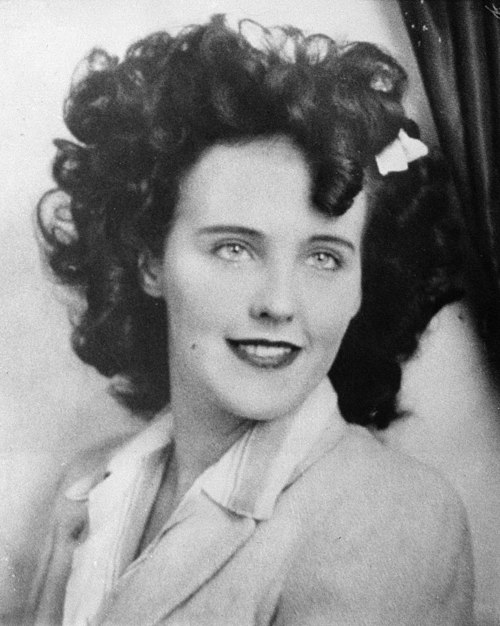
The Black Dahlia case refers to the murder of Elizabeth Short, a young woman whose death in 1947 became one of the most infamous unsolved crimes in American history. The case gained its nickname from the press, who labeled Short "The Black Dahlia," a reference to her dark clothing and the film noir style of the era. What began as a local investigation in Los Angeles quickly evolved into a national obsession, fueled by the brutality of the crime and the complete absence of a definitive suspect. Elizabeth Short was last seen in Los Angeles in January 1947. Days later, her body was discovered in a vacant lot in the Leimert Park area. The condition in which she was found shocked investigators and the public alike, and the case immediately drew intense media attention. Within hours, newspapers across the country were reporting on the discovery, turning Short's name into a headline that would never fully fade. Elizabeth Short was a young woman who had moved between cities on the West Coast and worked various small jobs. In 1943, she was briefly detained for underage drinking, during which her fingerprints and identification records were taken. These records would later play a role in confirming her identity after her death in 1947. Like many people drawn to Los Angeles during that era, she was pursuing stability and opportunity in a city that often failed to deliver either. The investigation into her murder was extensive but chaotic. Law enforcement received thousands of tips, confessions, and alleged sightings, many of which led nowhere. At the time, forensic methods were limited, and the overwhelming media attention further complicated the process. Evidence was often contaminated or misinterpreted, and the sheer volume of public interest created additional pressure that did not translate into progress. Over time, several suspects were considered, but none were conclusively linked to the crime. Investigators pursued multiple leads, some based on witness statements and others on circumstantial connections, yet each path ultimately failed to produce a definitive resolution. As years passed, the case slowly transitioned from active investigation to historical mystery. Theories about the identity of the killer have ranged widely, from individuals known to Short to entirely speculative connections involving unrelated crimes. Despite decades of analysis, no theory has been proven, and no suspect has been officially confirmed. The case remains open in a technical sense, but functionally unresolved. Today, the Black Dahlia case stands as a symbol of unresolved violence and the limitations of mid-20th-century investigative methods. It also reflects the way media attention can shape and sometimes distort public understanding of a crime. Most importantly, it preserves the memory of Elizabeth Short, whose life was reduced in the public record to a name attached to an unsolved act of brutality.
Victims
- Elizabeth Short (Age: 22)
Suspects
- George Hodel (Age: 41)
- Leslie Dillon (Age: 27)
- Mark Hansen (Age: 60)
- Robert Manley (Age: 25)
Case Discussion
Share your thoughts, theories and observations about this unresolved case.
Want to join the discussion? Log in to post a comment.
The lack of a confirmed suspect makes this case especially difficult to understand. I wonder which piece of evidence was the most important.
Some of the suspect theories seem convincing at first, but a lot of them fall apart when the timeline is compared closely.