Ted Bundy
Theodore Robert Bundy • 42 • USA
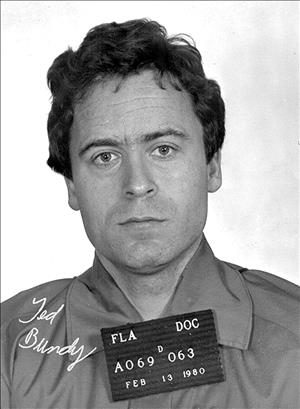
Victim Overview
Claimed Killed
30Confirmed Killed
20Wounded
5Description
Ted Bundy was not the kind of man people were taught to fear. He was educated, articulate, and, by many accounts, even charming. In the 1970s, across multiple states in the United States, that carefully constructed image allowed him to move unnoticed through society while committing a series of brutal crimes that would later make his name synonymous with calculated violence. Born Theodore Robert Bundy in 1946, his early life was marked by confusion and instability. Raised believing his grandparents were his parents and his mother was his sister, Bundy grew up in an environment layered with secrecy and emotional distance. While much of his childhood appeared outwardly ordinary, later accounts suggest early warning signs, including disturbing fascinations and a growing detachment from others. Bundy's crimes began to take shape in the early 1970s. He primarily targeted young women, often approaching them in public places by pretending to be injured or in need of help. Using charm and manipulation, he gained their trust before abducting them. His attacks were methodical and deliberate, often carried out in secluded areas. Over time, patterns began to emerge, linking disappearances across Washington, Oregon, Utah, and Colorado. Despite this, his ability to blend in allowed him to evade immediate suspicion. The investigation into Bundy's crimes was complicated by the lack of centralized communication between law enforcement agencies at the time. Different jurisdictions struggled to connect the cases, even as similarities became increasingly apparent. Witness descriptions occasionally mentioned a polite man named "Ted," but the name was so common it provided little immediate help. As the number of victims grew, so did public fear, with communities becoming increasingly aware that a predator was operating in plain sight. Bundy was eventually arrested in 1975 during a routine traffic stop, when police found suspicious items in his vehicle. Although initially charged with lesser crimes, further investigation began to tie him to multiple disappearances. What followed was a series of trials, escapes, and recaptures that only intensified public attention. In a chilling turn, Bundy managed to escape custody twice, committing additional murders before being apprehended for the final time. In 1979, Bundy was convicted of multiple murders in Florida. Over the years, he confessed to numerous killings, though the exact number of victims remains uncertain. He was executed in 1989 at the age of 42. Bundy's case left a lasting impact on criminal investigations and public perception. It challenged the assumption that danger is always visible, forcing both law enforcement and society to reconsider how predators can operate. More importantly, his crimes left behind a long list of victims whose lives were cut short, a reminder that behind every headline and statistic are real people, not just stories.
Killed Victims
- Lynda Ann Healy (Age: 21)
- Donna Gail Manson (Age: 19)
- Susan Elaine Rancourt (Age: 18)
- Roberta Kathleen Parks (Age: 20)
- Brenda Carol Ball (Age: 22)
- Georgann Hawkins (Age: 18)
- Janice Ann Ott (Age: 23)
- Denise Marie Naslund (Age: 18)
- Nancy Wilcox (Age: 16)
- Melissa Anne Smith (Age: 17)
- Laura Ann Aime (Age: 17)
- Debra Jean Kent (Age: 17)
- Caryn Eileen Campbell (Age: 23)
- Julie Lyle Cunningham (Age: 26)
- Denise Lynn Oliverson (Age: 24)
- Lynette Dawn Culver (Age: 12)
- Susan Curtis (Age: 15)
- Margaret Elizabeth Bowman (Age: 21)
- Lisa Janet Levy (Age: 20)
- Kimberly Diane Leach (Age: 12)
Wounded Victims
- Karen Sparks (Age: 18)
- Carol DaRonch (Age: 18)
- Karen Chandler (Age: 21)
- Kathy Kleiner (Age: 20)
- Cheryl Thomas (Age: 21)
Case Discussion
Discuss the case, investigation, psychology, evidence and unanswered questions.
Want to join the discussion? Log in to post a comment.
One of the most disturbing parts of this case is how long the crimes continued before the killer was stopped.
I think the investigation itself is just as interesting as the psychology behind the crimes.